

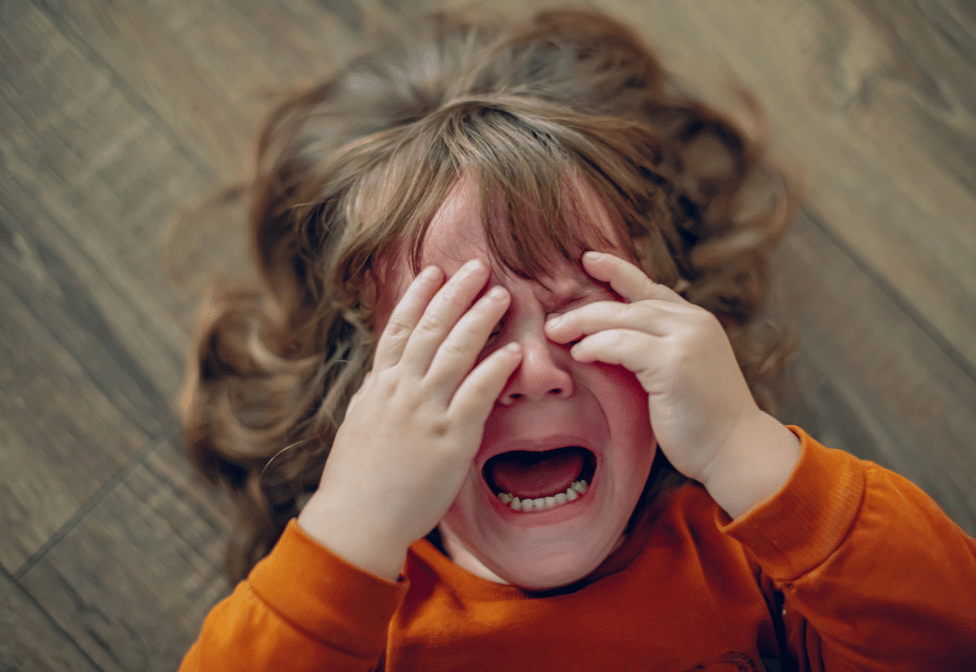
At Tikino, we often talk about overstimulation – but concretely, how do you know if your child is suffering from it? We'll review the signs to look for and how to adapt to them.
🌪️ What is overstimulation?
Overstimulation is an overload of information to process: too many sounds, too many images, too many activities, everything is moving too fast! For a child, whose brain is still developing and whose ability to self-regulate is still being learned, this bombardment is difficult to manage.
Unable to filter or take breaks, as an adult could, they endure it and their "reservoir" overflows. Of course, as they grow, children will be able to manage stimuli better and better. It's up to us, as parents, to help them understand their feelings and choose the environment that best suits their sensitivity.

👀 What are the signs to recognize?
Every child reacts differently, depending on their age and sensitivity, but here are some common signs:
-
Unexplained temper tantrums: After a very stimulating activity (a fast-paced cartoon, a video game, a noisy outing), your child might explode over nothing.
-
Great agitation or hyperactivity: They jump around, run, have trouble sitting still.
-
Difficulty falling asleep: Their brain is still "on" long after the activity has ended.
-
Irritability or aggressive behavior: They become more easily irritable with you or with their siblings.
-
Sudden withdrawal: On the contrary, some children become very quiet or isolate themselves to protect themselves.
- Signs of tension in their non-verbal communication: For example, when looking at a screen, no blinking, completely rigid posture, clenched fists, pursed lips or tight jaw, doesn't respond when called, is completely unable to disengage from the content.

⏳ Why is this normal?
These reactions are not "tantrums." They simply show that their brain is overwhelmed. Fast-paced cartoons, loud noises, light flashes, or bright colors are real accelerators of overstimulation.

🤗 How to prevent overstimulation?
- Prioritize calm activities at the end of the day: reading, storytelling, gentle games.
- Choose content appropriate for their age and pace: a slow-paced cartoon, a projected story, soothing music.
- Observe your child: every child has their tolerance threshold. The more attentive you are, the better you'll know how to adjust.
- Establish routines: the same time, the same place, the same duration... this provides reassurance and helps them disconnect.
✨ Tikino, a gentle alternative for calming
At Tikino, we designed our projector to limit overstimulation:
-
Slow animations,
-
Soft colors,
-
Calm narration and suitable musical accompaniment,
-
A shared rather than isolating experience,
- Chosen rather than endured content
The result? Less excitement, more shared moments, an experience that stimulates curiosity, and a more peaceful sleep.

💛 In conclusion
If your child is often overexcited after screen time or certain activities, they might be overstimulated. Listen to their signals, adjust their environment... and offer them more gentleness!
✨ Discover our soothing stories on tikino.fr
💤 And notice the difference!

